Field Notes
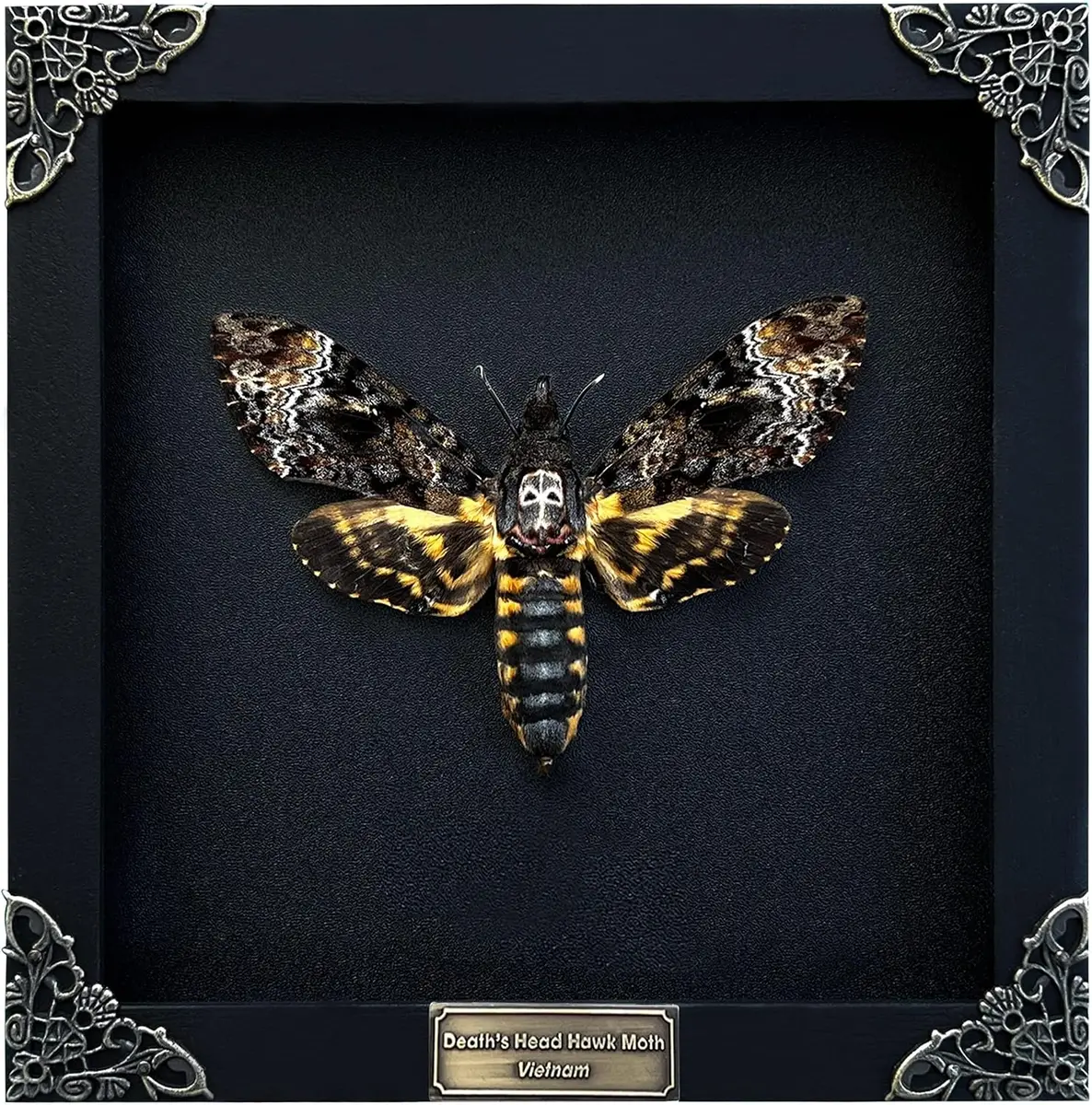
A real preserved Acherontia (death's head hawk moth) specimen mounted in a handmade wooden shadow-box frame, sold as an oddities-and-curiosities piece for tabletop or wall display. The skull-patterned thorax is the whole draw here — it's the marking that put this genus in every gothic-adjacent visual reference from Silence of the Lambs onward, and this is a genuine specimen behind glass rather than an illustration or resin cast of one.
The listing does not specify frame dimensions, wood species, glass versus acrylic glazing, or how much individual specimens vary in wingspan and marking clarity. They will vary, since this is real biological material, so expect the moth in the box to differ somewhat from the one in the photo. The handmade frame matters more than it sounds: a shadow box gives the moth depth behind the glazing, so it reads as an object rather than a picture. That depth is what separates a specimen from a print of one. Treat it as the anchor of a collection, not filler on a crowded wall.
Where it lives
Hang it at eye level on a wall painted deep plum or near-black, with a hot-pink mat, ribbon, or neighboring frame to pull it into the catalog's palette. On a shelf, lean it against the wall beside a glass cloche, a pink-tinted crystal, or a chrome candlestick so the moth's natural coloring sits against something glossy. Keep it out of direct sun. The specimen is the sinister half here, so let the surroundings be sweet: a lace runner, a small bowl of candy hearts, a vintage compact.
Who it’s for
For specimen collectors starting out, natural-history obsessives, and anyone who has been buying moth-print everything and wants the real thing. It is a serious gift for a friend with a cabinet of curiosities. Pass if real preserved insects make you or the recipient uneasy, if you need a guaranteed uniform specimen, or if you want a precise frame size for a planned gallery wall.
Before you buy
What to confirm on the current listing before it goes in the cart.
- Confirm frame dimensions on the Amazon page before planning wall placement or a gallery arrangement.
- Expect natural variation in wingspan and marking; the specimen you receive will not match the photo exactly.
- Keep it out of direct sunlight, which fades preserved insect coloring over time.
- Check whether the glazing is glass or acrylic if the piece will hang somewhere it could be knocked.