Field Notes
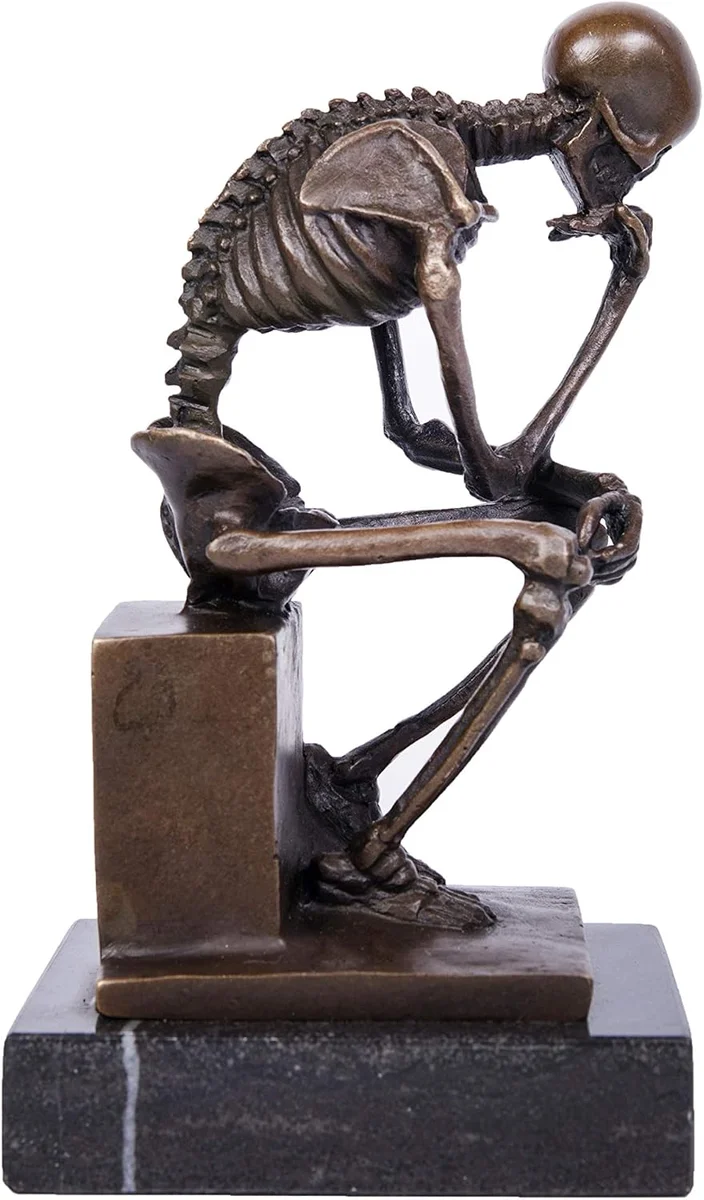
A bronze skeleton posed as Rodin's Thinker, the seated, chin-on-hand contemplation pose stripped down to bone. It's a memento mori joke told through art-history reference: the figure that traditionally represents thought and interiority is rendered as the thing thought fears, sat down to contemplate itself. Sold as a bronze statue rather than the resin novelty version that lane usually attracts, which puts it in the actual-sculpture tier alongside the collectibles-cabinet pieces rather than the desk-tchotchke drift.
Bronze is what makes the joke hold up. Metal has weight and a surface that changes slowly with handling and air, so the piece looks less like a gag and more like something from a professor's study. A metal skeleton also survives a knock that would snap resin fingers. The listing doesn't specify exact height, weight, patina finish, or whether the base is integral to the cast, so treat those particulars as unconfirmed until it's in hand.
Where it lives
It belongs on a desk or a library shelf, ideally beside real books and a reading lamp, where the Rodin reference lands. Against dark wood it looks scholarly. For the catalog's angle, set it on a stack of pink-spined books or a pink marble coaster, and the solemn metal figure starts to look like it's contemplating a very strange room. It pairs with brass, chrome, and glass. Keep it away from plastic skulls, which make it look like it's slumming.
Who it’s for
For art-history people, philosophy students, writers, and anyone who wants a memento mori object heavy enough to feel permanent. A strong graduation or retirement gift for a reader. Pass if you need confirmed dimensions or weight for a particular shelf, prefer a bright or cute finish, or want a large floor-standing sculpture. Metal statues are heavy for their size, so mind the edge of a shelf.
Before you buy
What to confirm on the current listing before it goes in the cart.
- Confirm height and weight on the listing before choosing a shelf or desk spot.
- Check product photos for the patina color, since bronze finishes vary from gold to dark brown.
- Verify whether the base is part of the casting or a separate piece.
- If it's patinated bronze, dust with a soft dry cloth and avoid metal polish, which strips patina.